
Nearly 70% of home cooks say inconsistent measuring leads to recipe mistakes, and you can avoid that with the right tools. When you choose sturdy measuring cups, clear spoons, and a kitchen scale, you make family meals easier to plan and repeat. Liquid measuring cups and child-safe labels also help cut spills and confusion, but the best setup depends on one detail you might not think about yet.
Key Takeaways
- Choose durable, easy-to-read measuring cups and spoons that fit your family’s cooking habits and storage space.
- Keep a basic nested set with dry and liquid measuring cups, plus spoons from 1/4 teaspoon to 1 tablespoon.
- Use a kitchen scale for fast, exact measurements of flour, meat, fruit, and portions.
- Measure liquids in clear cups on a flat counter, checking the meniscus at eye level for accuracy.
- Teach kids safe measuring by naming tools, demonstrating steps, and supervising with sturdy, kid-friendly equipment.
How to Pick the Right Measurement Tools
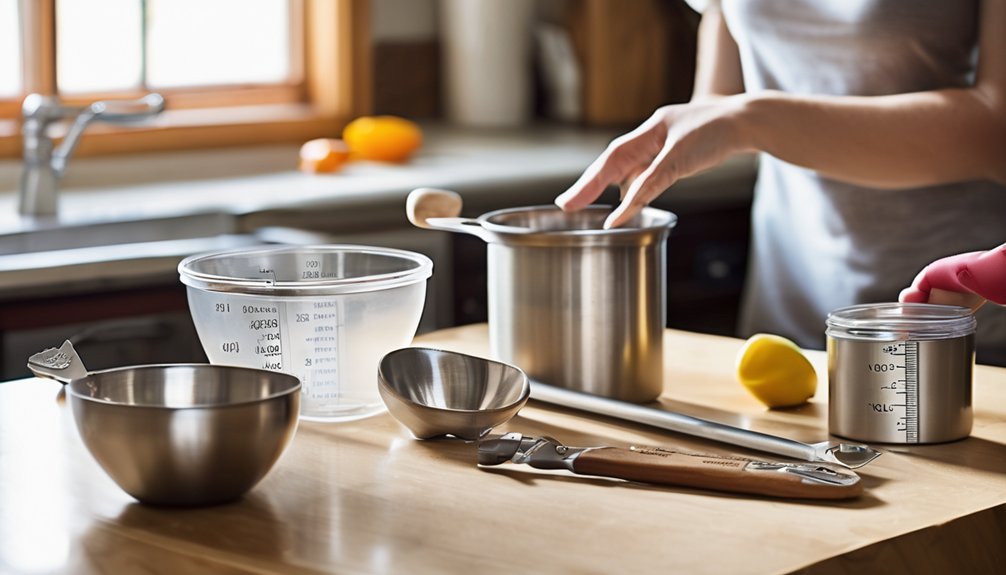
Choosing the right measurement tools starts with how you cook most often. If you bake regularly, choose tools that read accurately and stay consistent under frequent use.
Compare digital vs. traditional options by checking how quickly you need results and how much control you want. Digital tools help when precision matters; traditional tools work well when you prefer simple, visible measurements.
Next, judge material durability. Stainless steel and reinforced plastic usually outlast flimsy sets, especially in busy kitchens. Make sure handles feel balanced, markings stay clear, and pieces nest or store easily.
You’ll cook with more confidence when your tools match your habits, your space, and your level of precision. Avoid buying extras first; start with dependable basics that support your technique and last.
Measuring Cups and Spoons Every Family Needs
A basic set of measuring cups and spoons gives you the tools you need for everyday cooking and baking. Choose measuring cup types that include dry and liquid options, then keep a nested set for simple storage. Use spoon sizes that cover 1/4 teaspoon through 1 tablespoon so you can follow recipes without guesswork.
| Tool | Purpose |
|---|---|
| 1 cup | Big batters |
| 1/2 cup | Quick portions |
| 1 tsp | Balanced seasoning |
| 1 tbsp | Larger measures |
This set helps you work cleanly, repeat results, and teach kids good habits. When each tool has a clear job, you waste less time and build confidence. Clean them after use and store them together so they’re ready when you need them.
Why Kitchen Scales Make Family Cooking Easier
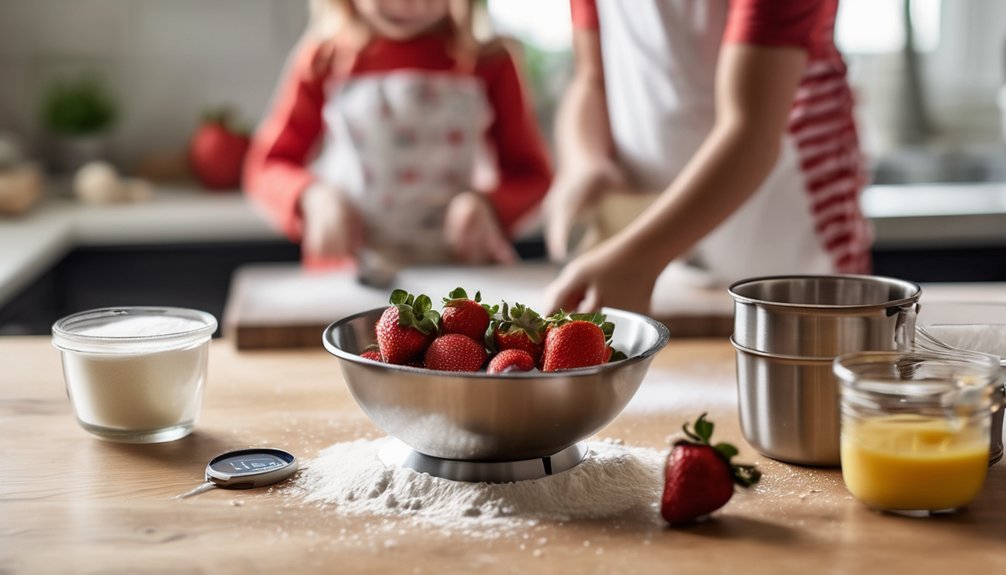
Kitchen scales make family cooking easier because they give you exact amounts fast, so you don’t have to guess with cups and spoons. You can weigh flour, meat, fruit, and snacks with confidence, and your recipes stay consistent every time.
Digital scales help you read measurements quickly, switch units, and reset the display when you add ingredients. That saves time when you’re cooking with kids or preparing several servings at once. They also support portion control, so you can serve meals that match your goals and keep leftovers predictable.
Place the bowl on the scale, tare it to zero, then add each ingredient until you reach the target weight. With practice, you’ll move faster and cook with tighter accuracy.
Measuring Liquids Without Spills
Measuring liquids accurately takes the same kind of care as weighing dry ingredients, but it also helps to use the right tool so you don’t spill or misread the level.
Choose a clear measuring cup with labeled markings and place it on a flat counter. Then use these liquid measurement techniques:
- Pour slowly until the liquid nears the line.
- Bend down so the meniscus sits at eye level.
- Add the last drops with a spoon or spout control.
- Wipe the rim before moving the cup.
These spill prevention tips keep your measurements precise and your workspace clean.
If you need repeated amounts, measure once, pour carefully, and reset before the next ingredient.
Teaching Kids to Use Measuring Tools Safely
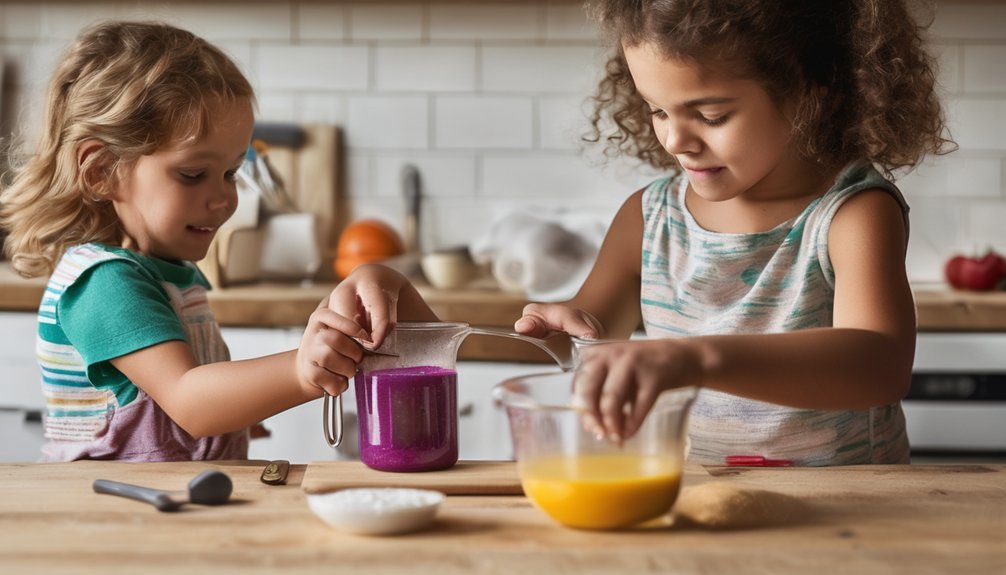
When you teach kids to use measuring tools safely, start by showing them how to handle each item with care and where it belongs on the counter.
You can build measuring safety by naming each tool, then demonstrating one step at a time. Choose kid friendly tools with large labels, sturdy handles, and simple markings.
Keep dry cups and spoons away from wet hands, and set liquids in a stable bowl before pouring. Show your child to level flour with a straight edge, not a finger.
Remind them to keep tools away from the stove edge and to walk, not run, while carrying them. Supervise closely, correct mistakes calmly, and let practice turn careful habits into skill.
Frequently Asked Questions
Which Measurement Tools Are Best for Baking With Toddlers?
You’ll do best with sturdy measuring cups, spoons, and a liquid measuring cup; they boost toddler engagement and make fun measurements easy. Choose wide handles, clear markings, and nesting sets so you can guide safely.
How Often Should Measuring Cups Be Replaced?
You should replace measuring cups when they warp, crack, or lose measuring cup accuracy—why risk bad results? Check material durability yearly, and if markings fade or handles loosen, swap them sooner for reliable, precise measurements.
Can Antique Measuring Tools Be Used Safely for Food?
Yes, you can use antique measuring tools safely if you verify vintage tool safety and food grade materials, avoid cracks or corrosion, and clean them thoroughly. You’ll get reliable use when you inspect them carefully.
What Is the Easiest Way to Store Small Measuring Spoons?
You can store small measuring spoons on a ring or hook; it’s the easiest measuring spoon storage. This organizing kitchen tools approach keeps sizes visible, prevents loss, and lets you grab the right spoon fast.
Do Colored Measuring Tools Improve Cooking for Kids?
Yes, colored measuring tools can improve cooking for kids by boosting kid engagement and using color psychology. You’ll help them spot sizes faster, follow steps confidently, and build accuracy through repeated hands-on practice.
Conclusion
With the right cooking measurement tools, you can make family meals more accurate, easier, and a lot less stressful. Think of your kitchen like a well-tuned orchestra: when each cup, spoon, and scale does its part, everything comes together smoothly. Keep your tools sturdy, simple, and easy to read, and you’ll save time while building confidence. Teach your kids to measure safely, and you’ll turn everyday cooking into a skill they can grow with.