
Your home is a fortress, but even fortresses need careful guarding. When you bring a baby into the mix, it’s crucial to identify potential dangers lurking in every corner. From sharp edges to unsecured furniture, each room poses unique challenges. Knowing where to start can make all the difference in creating a safe environment for your little one. Let’s explore practical steps to ensure your home is truly babyproofed.
Key Takeaways
- Walk through your home to identify and secure sharp edges, small objects, and hazardous areas to prevent accidents as your baby grows.
- Use furniture anchors for heavy items like bookshelves and dressers to prevent tipping and keep fragile items out of reach.
- Install appropriate safety gates in doorways and at the top and bottom of stairs to create safe boundaries for your baby.
- Cover electrical outlets with child-proof covers and manage cords with clips and sleeves to reduce tripping hazards and prevent electrical accidents.
- Supervise your baby closely during visits and educate guests about safety measures to ensure a safe environment for everyone.
Assessing Your Home for Hazards
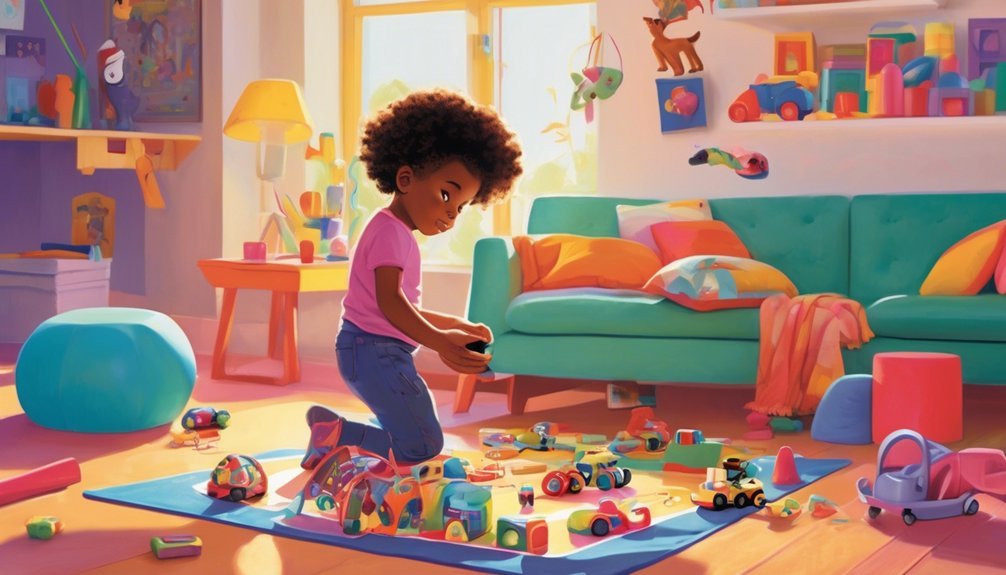
Before you bring your baby home, it’s crucial to assess your space for potential hazards.
Start with hazard identification by walking through each room and noting anything that could pose a risk. Look for sharp edges, small objects, and cords that could entangle or choke.
Next, conduct a risk assessment to determine how serious these hazards are. Consider your baby’s mobility as they grow; what seems safe now may not be later.
Secure heavy items that could tip, and check for loose rugs that might cause slips.
Securing Furniture and Large Items
Once you’ve identified hazards in your home, it’s time to focus on securing furniture and large items that could pose a risk as your baby begins to crawl and walk.
Start by using furniture anchors to secure bookshelves, dressers, and televisions to the wall. This simple step can prevent tipping accidents that can lead to serious injuries.
Next, assess heavy item safety—make sure that any large objects or appliances are stored safely out of reach or secured. Keep fragile items away from the edges of surfaces.
As you babyproof, consider your child’s curiosity and mobility; a little preparation now can create a safer environment for your little explorer.
Your peace of mind is worth the effort.
Installing Safety Gates
As your baby becomes more mobile, installing safety gates can be a crucial step in keeping them safe from hazardous areas in your home. There are various safety gate types to suit your needs. When choosing, consider the location and the gate’s ease of use.
| Safety Gate Type | Features | Best For |
|---|---|---|
| Pressure-mounted | Easy to install | Doorways |
| Hardware-mounted | Secure and sturdy | Stairs |
| Retractable | Space-saving | Wide openings |
| Extra-wide | Fits larger spaces | Open floor plans |
| Play yard | Versatile layout | Play areas |
Installing gates helps create a safe environment for your little one to explore without constant worry. Always check for proper installation and functionality to ensure safety.
Covering Electrical Outlets
A significant number of household accidents involve toddlers and electrical outlets, making it essential to cover these potential hazards. Outlet covers are straightforward yet effective tools for enhancing electrical safety in your home. They prevent little fingers from exploring dangerous openings and help you feel more at ease.
When choosing outlet covers, opt for ones that are difficult for kids to remove but easy for adults to operate. Consider sliding covers or those with a safety lock feature for added security.
Make it a habit to check outlets regularly, ensuring covers remain intact. Remember, babyproofing your home is all about creating a safe environment for your child, and securing electrical outlets is a crucial step in that journey.
Storing Chemicals and Medications Safely
Since young children are naturally curious, it’s crucial to store chemicals and medications out of their reach to prevent accidental ingestion or exposure.

Start by designating a high cabinet or locked area for chemical storage, including cleaning supplies, pesticides, and other hazardous materials. Use childproof locks to ensure they stay secure.
For medications, keep them in their original containers with labels intact, and always store them away from children’s sight.
When it’s time for medication disposal, follow your local guidelines to safely discard expired or unused prescriptions.
This proactive approach not only protects your little one but also creates a safer environment for your entire family.
Managing Cords and Wires
To create a safer environment for your little ones, managing cords and wires is essential. Start by identifying areas where cords are exposed, like behind TVs and computer desks.
Use cord clips to secure loose wires along walls or furniture edges, keeping them out of reach. This simple step not only prevents tripping hazards but also reduces the temptation for little hands to tug or pull.
Consider investing in cord management solutions, such as cable covers or sleeves, to further conceal wires. For longer cords, try to bundle them neatly and secure them with ties.
Babyproofing the Kitchen
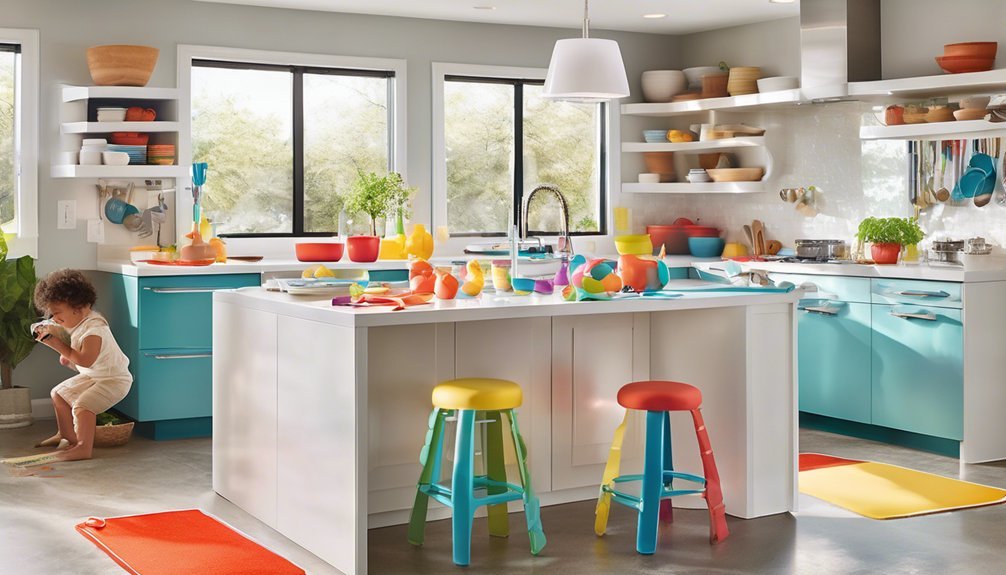
When you think about babyproofing your home, the kitchen often poses the greatest challenges due to its many hazards.
Start by securing all kitchen storage areas. Use childproof latches on cabinets to keep dangerous items out of reach. Make sure cleaning supplies, sharp utensils, and small objects are stored away safely.
For appliance safety, unplug any appliances when they’re not in use and store them out of reach. If you have a stove, consider using knob covers to prevent little hands from turning them on.
Always keep hot items, like pots and pans, at the back of the stove. By taking these steps, you’ll create a safer environment for your little one to explore and grow.
Creating a Safe Bathroom Environment
Creating a safe bathroom environment is crucial, as this space can harbor numerous hazards for young children.
To protect your little one, consider these practical steps:
- Install non-slip mats in and around the bathtub to prevent falls.
- Store all medications and cleaning supplies out of reach or in locked cabinets.
- Use bath toys that are safe and age-appropriate to keep your child entertained while ensuring they’re not a choking hazard.
- Always supervise bath time, even if your child seems confident in the water.
Protecting Your Baby in the Living Room
After ensuring your bathroom is safe, it’s time to focus on the living room, where babies often spend a lot of their time exploring.
Start by securing sharp furniture edges with soft corners, preventing any accidental bumps or bruises.
Next, keep the floor clear of small objects to avoid choking hazards.
Invest in sturdy toy storage solutions to keep toys organized and easily accessible, promoting a safe play environment.
Ensure that heavy items, like bookshelves, are anchored to the wall to prevent tipping.
Lastly, consider using a baby gate to create boundaries if needed.
With these simple steps, you’ll create a cozy and safe space for your little one to enjoy their adventures in the living room.
Ensuring Safe Sleeping Arrangements
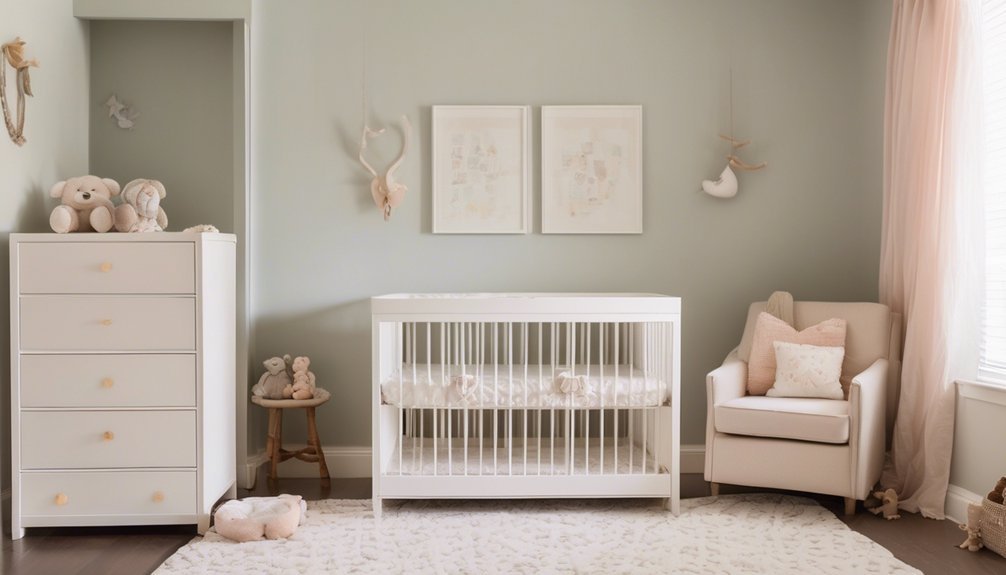
To ensure your baby sleeps safely, start by choosing a crib that meets current safety standards.
Remember, crib safety is crucial for creating a secure sleep environment. Here are some key points to consider:
- Ensure the crib slats are no more than 2.375 inches apart to prevent entrapment.
- Use a firm mattress that fits snugly in the crib without gaps.
- Keep the crib free from pillows, blankets, and stuffed animals to reduce suffocation risks.
- Regularly check for any loose or broken parts, ensuring the crib remains sturdy.
Outdoor Safety Measures
When you take your baby outdoors, ensuring their safety should be a top priority.
Start by creating a secure play area in your garden, free from any garden hazards like sharp tools or poisonous plants. Always supervise your little one during outdoor play, keeping a close eye on their surroundings.
Install safety gates to restrict access to potentially dangerous areas, such as pools or steep stairs. Additionally, consider using soft surfaces, like grass or rubber mats, to cushion any falls.
Don’t forget about sun protection; use hats and sunscreen to shield your baby from harmful UV rays.
Educating Family and Visitors on Safety Protocols
Educating family and visitors about safety protocols is crucial for creating a secure environment for your baby.
You’ll want everyone to feel confident and aware when they’re around your little one. Start by providing safety training to anyone who spends time in your home. This ensures they understand potential hazards and how to avoid them.
Here are some key points to cover:
- Explain the importance of keeping small objects out of reach.
- Share guidelines for using baby gates and high chairs safely.
- Discuss the significance of monitoring your baby during visits.
- Reinforce visitor awareness regarding dangerous areas or items.
Frequently Asked Questions
What Age Should I Start Babyproofing My Home?
You should start babyproofing your home around the six-month mark, as your little one reaches developmental milestones like crawling. Staying ahead with a babyproofing timeline ensures a safe environment as they become more mobile.
How Often Should I Re-Evaluate My Babyproofing Measures?
You should conduct regular assessments and adapt your babyproofing measures to your child’s changing needs. Every few months, check for potential hazards, ensuring your home remains a safe haven as your little one grows.
Are There Any Babyproofing Products I Should Avoid?
You should avoid unsafe products like inflatable crib bumpers and decorative pillow inserts. Many babyproofing myths suggest these items are safe, but they pose risks. Stick to verified safety standards for your peace of mind.
Can I Use Second-Hand Babyproofing Items Safely?
Using second-hand babyproofing items can feel like a treasure hunt, but always check for safety standards and product recalls. You want your little one safe, so ensure those items meet current guidelines before use.
How Can I Involve Older Siblings in Babyproofing?
Involve older siblings by assigning them specific sibling responsibilities during babyproofing. Make it a fun bonding experience through teamwork activities like creating safety zones, demonstrating how to secure items, and encouraging them to share ideas.
Conclusion
By taking these steps to babyproof your home, you’re not just creating a safer environment; you’re building a fortress of comfort and security for your little one. Every corner of your home can be transformed into a haven of safety with a little effort and vigilance. Remember, constant supervision and educating family and friends about safety protocols are essential. With these measures in place, you can enjoy peace of mind while your baby explores the world around them.