
Simple chores can help toddlers build early independence, coordination, and confidence when tasks match their age and abilities. Small jobs like putting toys in a bin, wiping a table, or carrying napkins can support learning without overwhelming them. With clear guidance, repetition, and gentle praise, these routines often become manageable parts of daily life. The next question is which chores are truly appropriate at each stage.
Key Takeaways
- Toddlers do best with short, safe chores like putting toys in bins, carrying lightweight items, and placing clothes in a hamper.
- Kitchen helpers can rinse fruit, stir batter, set napkins, or dry plastic cups with a small towel.
- Cleanup chores include returning books to baskets, sorting blocks, and matching socks or toys by type.
- Show each task in one simple step, keep instructions brief, and stay close for gentle supervision.
- Praise effort, not perfection, and use chores as playful routines that build confidence, responsibility, and belonging.
What Makes a Good Toddler Chore?
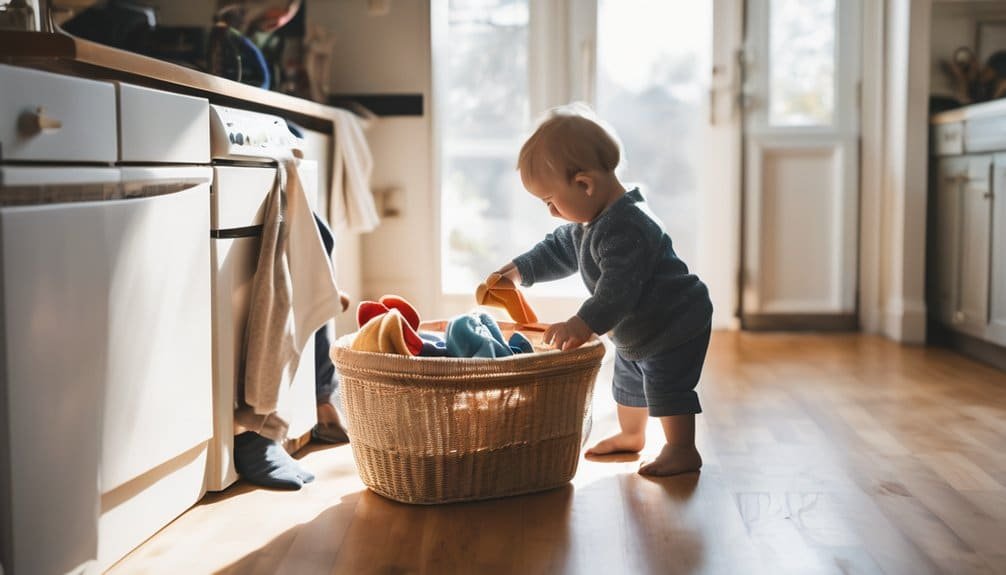
A good toddler chore is simple, brief, and safe, matching a child’s developing attention span and motor skills. It should feel playful rather than demanding, with a clear beginning and end.
Tasks that use big motions, like carrying a light cloth or placing toys in a bin, support coordination without causing frustration. Age appropriate tasks work best when an adult offers calm guidance, gentle encouragement, and steady supervision.
Repetition helps toddlers learn through habit, so engaging routines can make participation feel natural and comforting. A well-chosen chore also builds confidence, because success arrives quickly and is easy to notice.
The aim is not productivity alone, but early cooperation, responsibility, and warm connection through everyday moments shared together.
Simple Toddler Chores by Age
Many simple toddler chores can be matched to age and ability so that each child can participate successfully without feeling overwhelmed.
At younger ages, toddlers may begin with age appropriate tasks such as putting toys into a bin, carrying lightweight items, or helping place clothes in a hamper. As coordination grows, children can try wiping low surfaces, matching socks, or setting out napkins.
These small responsibilities build routines, attention, and a sense of belonging. Gentle supervision and brief instructions support success while preserving chore independence.
Praise for effort, not perfection, helps toddlers feel capable and warmly connected to the family. When tasks remain short, consistent, and realistic, toddlers often respond with pride and steady participation.
Kitchen Chores Toddlers Can Help With
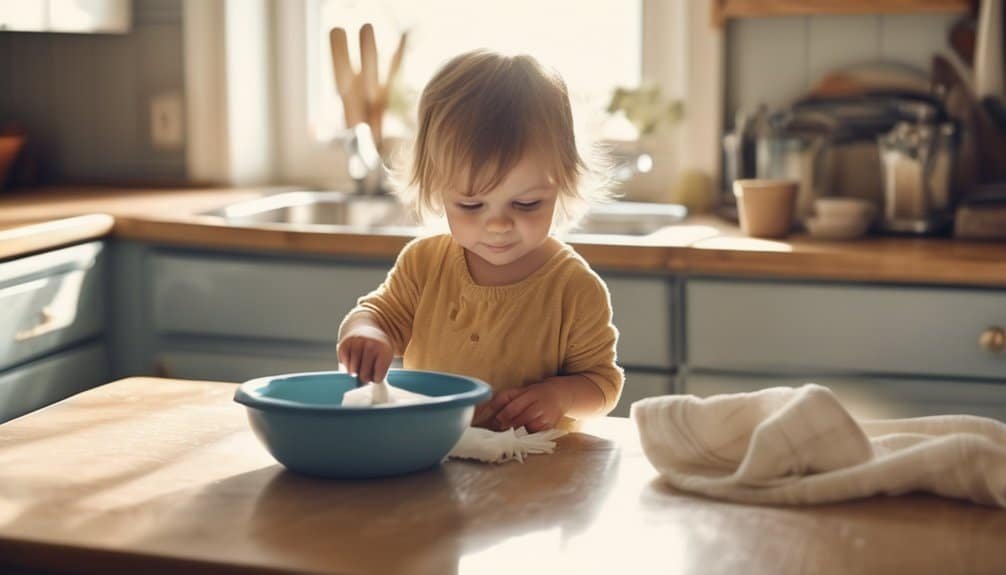
Kitchen routines can offer toddlers practical ways to contribute while staying close to an adult’s guidance. Simple tasks like rinsing fruit, stirring batter, or placing napkins on the table can build confidence without overwhelming young hands.
During snack preparation, a toddler may help peel a banana, add soft pieces to a bowl, or carry lightweight items with supervision. After meals, dish drying can begin with plastic cups or unbreakable utensils, using a small towel and gentle coaching.
These chores support motor skills, attention, and early responsibility while preserving a warm, connected rhythm in the home. Adults should keep steps brief, praise effort, and choose safe tasks that match the child’s abilities.
Toy Cleanup Chores for Toddlers
Toy cleanup can become a simple daily routine that helps toddlers learn order, responsibility, and follow-through. At this age, brief, guided tasks work best, especially when an adult models the steps and keeps expectations gentle.
Toddlers can place blocks in a bin, return books to a basket, or sort dolls and cars into separate containers. Simple toy organization supports recognition of categories and reduces overwhelm.
Cleanup games, such as racing a timer or singing a short song, can make the task feel warm and inviting. Praise for effort, not perfection, helps a child feel secure and capable.
Repeating the same routine after play teaches consistency, and consistency strengthens habit formation. Small successes matter, and tender encouragement keeps participation joyful.
Bedroom and Playroom Chores
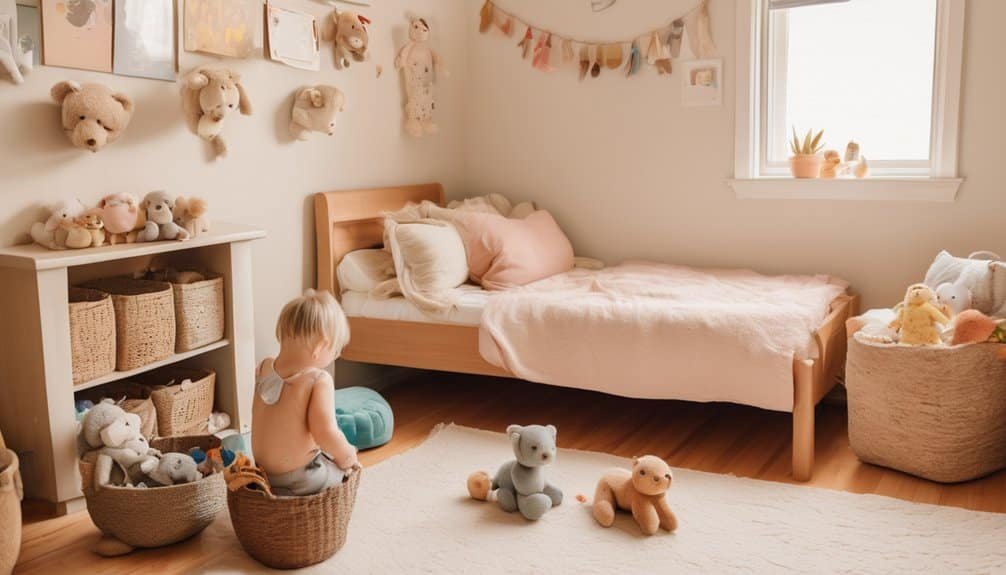
In the play area, playroom tidying can begin with one step at a time, such as gathering blocks, handing crayons to an adult, or placing puzzle pieces back in their container. Clear labels, picture cues, and short routines help toddlers learn what belongs where.
Gentle praise and patient repetition strengthen follow-through and confidence. These chores work best when they feel playful, brief, and closely guided, allowing the child to experience competence, comfort, and closeness while helping care for shared family spaces.
Outdoor Chores Toddlers Can Do
Outdoor chores for toddlers work best when they are simple, brief, and closely supervised. Small hands can enjoy helping with gardening activities such as placing seeds into soil, watering with a tiny can, or gathering fallen leaves. These tasks support motor skills, attention, and a gentle sense of contribution without overwhelm.
Outdoor cleanup can include picking up sticks, carrying lightweight toys to a basket, or wiping muddy shoes on a mat.
- Water plants with a small container
- Put garden tools into a bin
- Collect leaves or twigs from the yard
These jobs feel warm and meaningful when an adult stays nearby, offers calm praise, and keeps expectations modest. A few minutes at a time is often enough for young children.
How to Teach Toddler Chores
Teaching toddler chores works best when adults break each task into a single simple step, demonstrate it first, and keep the expectation short and clear. A calm, close presence helps toddlers feel safe while learning.
Short instructions, steady routines, and gentle repetition support understanding without overwhelm. Adults can guide small hands, then step back as confidence grows, which strengthens chore independence over time.
Praise should be specific and immediate, such as noticing when a toy is placed in the basket or a cloth is carried to the sink. This kind of support encourages responsibility building while keeping the experience manageable for young children.
When expectations stay realistic, toddlers are more likely to cooperate, practice consistently, and begin seeing themselves as capable helpers.
Make Toddler Chores Feel Like Play
Turning chores into playful activities can make toddlers more willing to participate and more likely to stay engaged. When adults frame simple jobs as chore games, young children often copy, move, and explore with more confidence.
Short playful tasks, such as carrying socks to a basket or “rescuing” toys from the floor, match a toddler’s brief attention span and love of repetition. Gentle pretend play also supports motor skills, language, and cooperation without pressure.
- Ask the child to “feed” laundry to the hamper.
- Sing a familiar tune while tidying toys together.
- Invite hopping, marching, or sorting by color.
This approach feels warm and safe, helping a toddler see helping as joyful shared time rather than a demand.
Toddler Chore Charts and Rewards
Simple chore charts can build on that playful momentum by giving toddlers a clear, visual sense of what comes next. With pictures, simple checkboxes, or stickers, the chart supports routine while reducing verbal reminders.
Evidence suggests that young children respond well to immediate feedback, so chore chart benefits often include stronger cooperation, growing confidence, and a gentle sense of responsibility.
Reward system ideas work best when they are small, predictable, and warmly given, such as praise, a special song, or choosing a bedtime book. At this age, rewards should reinforce participation rather than perfection.
When adults keep expectations modest and encouraging, toddlers begin to connect helping with belonging, not pressure.
Safety Tips for Toddler Chores
Safety starts with choosing chores that match a toddler’s size, strength, and attention span, since young children learn best when tasks feel manageable and closely supervised.
Caregivers can support secure participation by using safe tools such as lightweight cloths, plastic bins, and child-sized brooms. The supervision importance cannot be overstated; an adult should stay nearby, guide each step, and step in before frustration or risk grows. Small, predictable chores reduce wandering and help the child feel calm and capable.
- Keep cleaning products locked away and use plain water when possible.
- Clear floors of sharp, hot, or breakable items before starting.
- Praise careful movement, not speed, so habits form gently.
With patient guidance, chores can feel warm, reassuring, and safely shared.
Frequently Asked Questions
How Do I Handle My Toddler Refusing Chores?
He should stay calm, offer choices, use positive reinforcement, and keep expectations tiny. Toddler motivation often improves with chore rewards, fun activities, and gentle routines. Short praise and patience usually reduce resistance and build cooperation.
Should Toddlers Do Chores Every Day or Only Sometimes?
Toddlers should do chores sometimes, not endlessly, like seeds watered gently. A daily routine with tiny tasks can build chore benefits while respecting attention spans and moods, keeping expectations age-appropriate, nurturing, and loving.
What if My Toddler Loses Interest Quickly?
If interest fades quickly, the toddler likely needs shorter tasks, frequent praise, and engaging activities. Evidence suggests toddler motivation improves with choice, repetition, and playful routines, helping responsibilities feel safe, warm, and manageable.
How Long Should a Toddler Chore Session Last?
A toddler chore session should last about 2 to 5 minutes, matching a short attention span. Gentle positive reinforcement helps keep it age-appropriate, evidence-based, and nurturing, while preserving warmth and closeness.
Can Siblings Do Chores Together at This Age?
Yes—siblings can do chores together at this age, can’t they? Gentle sibling teamwork often boosts chore motivation, while keeping tasks simple, brief, and closely supervised helps toddlers feel secure, capable, and connected.
Conclusion
In the end, simple chores often become simple habits. A toddler who puts away blocks today may, by coincidence and repetition, reach for a towel tomorrow, then a napkin, then a spoon. Small tasks fit small hands, and small successes build confidence. With gentle guidance, safe choices, and steady praise, chores can feel less like work and more like belonging. In that quiet pattern, independence grows, one playful step at a time.