You can protect your family by building a simple emergency plan before disaster strikes. Start by mapping likely hazards, choosing meeting spots, and assigning clear roles for each person. Then set up a communication method, pack essential supplies, and plan for kids, pets, or special needs. The details matter more than you might expect, and one missing step can change everything when time runs out.
Key Takeaways
- Identify likely emergencies, family needs, and responsibilities, then write a clear plan and keep copies accessible.
- Choose two meeting spots and map at least two evacuation routes from each room and entrance.
- Create a communication plan with an out-of-area contact, phone numbers, and backup ways to check in.
- Pack a three-day emergency kit with water, food, first aid, flashlight, radio, chargers, and sanitation items.
- Include plans for children, pets, and anyone with special needs, and practice the plan regularly.
Build Your Family Emergency Plan
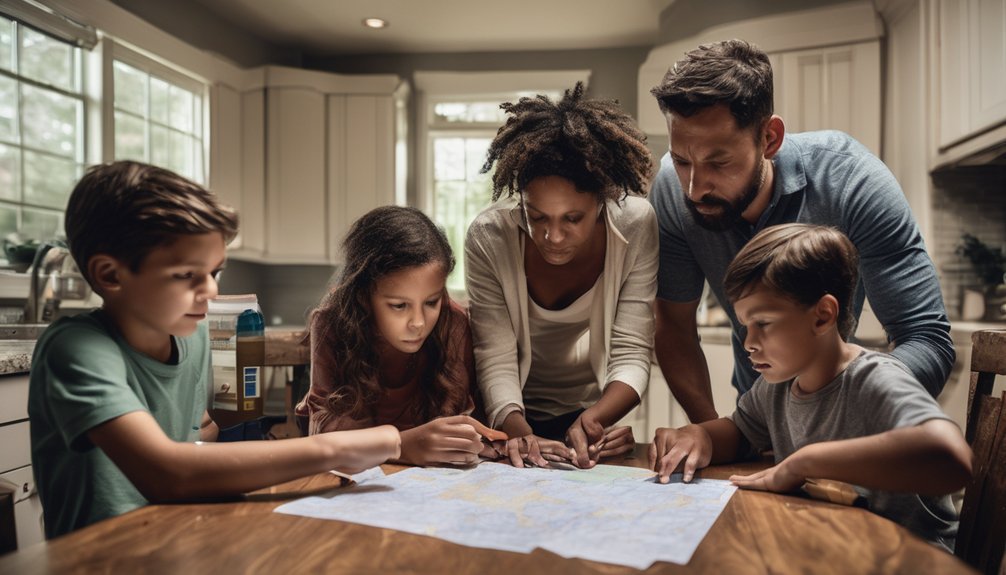
Start by sitting down together and mapping out what your family will do if an emergency happens. Identify likely hazards, then complete a quick risk assessment for your home, routines, and local area.
List each person’s needs, skills, medications, and contact details so you can plan with precision. Assign responsibilities clearly: who gathers documents, who checks utilities, and who helps children or pets.
Use resource allocation wisely by setting aside supplies, money, and communication tools where everyone can reach them. Write your plan in plain language, store copies in key places, and review it regularly.
Practice the steps until everyone can respond without confusion. When you build your plan this way, you strengthen coordination, reduce delays, and improve your family’s ability to act under pressure.
Choose Meeting Spots and Evacuation Routes
Next, choose meeting spots and evacuation routes so everyone knows where to go if you’re separated. Pick two designated locations: one near your home and one outside your neighborhood.
Select safe zones that are easy to reach on foot and unlikely to be blocked by fire, flooding, or debris. Then map at least two evacuation routes from each room, entrance, and vehicle area.
Favor routes with simple turns, clear landmarks, and no choke points. Walk each path with your family, note obstacles, and practice moving through them quickly.
If possible, include alternate routes for different hazards, such as smoke, severe weather, or road closures. Write the routes on your plan, keep copies accessible, and review them whenever your home layout changes.
Create a Family Communication Plan
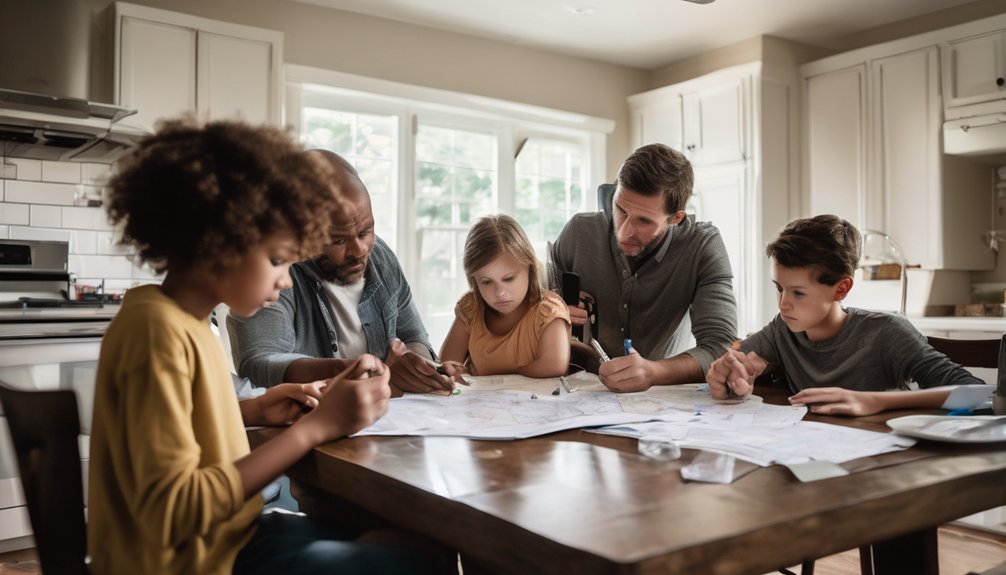
Once you’ve picked your meeting spots and evacuation routes, set up a family communication plan so everyone knows how to check in, share locations, and ask for help.
Choose one out-of-area emergency contact who can relay messages if local lines fail. List each person’s phone numbers, email, and social handles, then store them in every device and on paper.
Agree on primary communication methods, such as text, calling, and a shared messaging app, plus a backup if service drops. Decide when to send status updates and what exact message to use.
Teach children to provide their name, location, and need. Practice the plan during drills so your family can act fast, reduce confusion, and stay connected under pressure.
Pack a Family Emergency Kit
Assemble a family emergency kit with enough supplies to keep everyone safe and comfortable for at least three days. Build it in a sturdy, portable container and store it where you can grab it fast.
Focus on essentials that support immediate self-sufficiency and don’t depend on outside services.
- Water: one gallon per person per day
- Shelf-stable food and a manual opener
- First aid supplies, plus prescriptions
- Flashlight, batteries, and a radio
- Copies of documents, cash, and keys
Check expiration dates monthly and replace items before they fail. Use airtight food storage to protect snacks and meal components from moisture and pests.
Keep matches, sanitation items, and a phone charger inside. Label the kit clearly, and rehearse retrieving it so you can act without hesitation when minutes matter.
Plan for Kids, Pets, and Special Needs
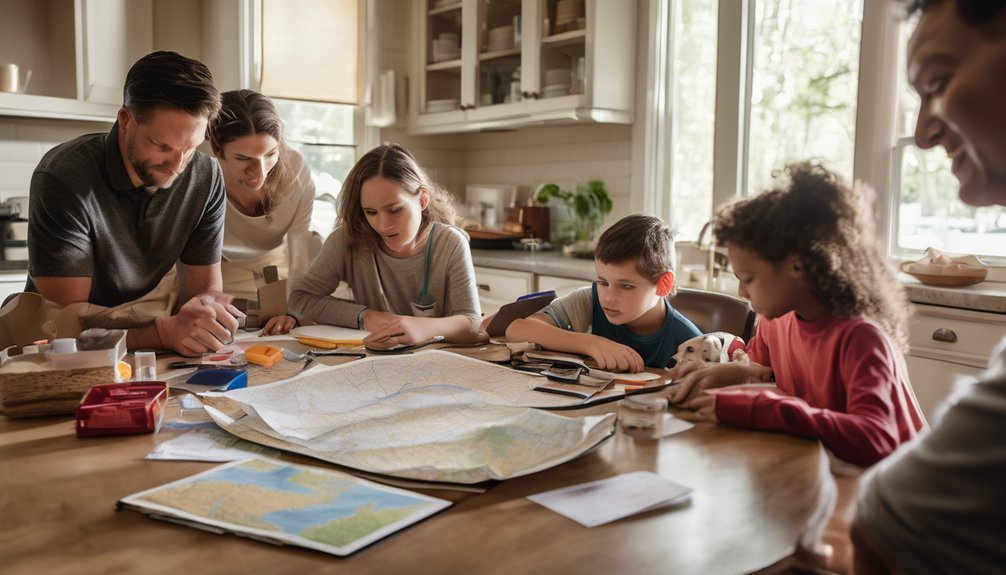
Build the rest of your plan around the people and animals who rely on you most.
For child safety, create age appropriate plans that tell each child who to call, where to go, and how to stay calm. Assign caregiver roles so every adult knows who handles pickups, medications, and documentation.
For pet preparedness, identify carriers, leashes, food, and a backup shelter that accepts animals.
If someone has special needs, map out inclusive strategies for mobility, communication, medications, and emotional support.
Keep instructions simple, visible, and updated. Use names, photos, and plain language so everyone can follow them fast.
Make sure trusted neighbors or relatives understand the plan too.
Then review it with everyone during practice drills to reveal gaps and confirm each person’s part.
Practice Your Family Emergency Plan
Put your family emergency plan into action with regular practice drills so everyone knows what to do when stress is high. Run the plan like a real event, and keep each exercise simple, timed, and focused.
During each session, you should:
- review evacuation routes
- confirm role assignments
- practice calling emergency contacts
- gather at the meeting point
- test supplies and equipment
Speak clearly, move quickly, and correct confusion immediately. Rotate duties so everyone learns each task, and use emergency drills to build confidence and speed.
Afterward, ask each person what felt clear and what slowed them down. Rehearsal helps you turn instructions into habit, so when a crisis hits, you won’t waste time guessing. Practicing together makes your family more coordinated, calm, and ready.
Update Your Family Emergency Plan Regularly
Review your family emergency plan at least twice a year, and update it whenever your household, health, or location changes. Schedule emergency plan reviews on a calendar so they don’t slip.
Check phone numbers, meeting places, evacuation routes, medication lists, and school or work contacts. If someone changes jobs, starts driving, moves, or develops a medical need, revise the plan immediately.
Use family preparedness updates to confirm each person knows their role, where supplies are stored, and how to reconnect if separated. After drills, record what failed and fix it fast.
Keep a dated copy in print and digital formats, then replace outdated versions. Consistent maintenance keeps your plan accurate, usable, and ready when you need it most.
Frequently Asked Questions
What Documents Should Go in a Family Emergency Binder?
Include identification copies, insurance cards, emergency contacts, medical information, prescription lists, legal documents, home records, and evacuation plans. You’ll want passwords, school forms, pet records, and a contact sheet for quick access.
How Do We Set a Household Emergency Budget?
Set your household emergency budget by listing essential expenses, ranking budget priorities, and funding emergency savings for three to six months. Then set caps for food, shelter, utilities, transportation, and supplies, and review it monthly.
What Insurance Coverage Helps After a Disaster?
You’ll want homeowners, renters, auto, flood, and disability coverage; don’t put all your eggs in one basket. Check policy limits, file insurance claims fast, and pair disaster relief with recovery assistance and financial preparedness.
How Can We Protect Important Digital Files?
You can protect important digital files by using cloud storage and regular data backups. Encrypt sensitive files, enable two-factor authentication, keep offline copies, and test restores often so you’re ready if devices fail or get lost.
Where Should We Keep Spare House and Car Keys?
Keep spare house and car keys in a lockbox, trusted neighbor’s home, or secure key storage inside your garage. Balance security with key accessibility, so you can grab them fast without risking theft.
Conclusion
With your family emergency plan in place, you can breathe easier knowing everyone has a path home. Picture the steady glow of a flashlight, the sound of calm voices, and the quick steps to your meeting spot. Keep your kit ready, your routes clear, and your contact plan simple. Review it often, practice until it feels natural, and update it as life changes. A little preparation now can carry your family safely through any storm.